The billionaires haven’t necessarily broken the press machine. They’ve just got it printing money instead of news.
Today, here, now – right where you are – the “freedom of the press” is a hollowed-out version of what it once was, carefully constructed by the influence of money, power, and politics, clinging to the veneer of authority while lacking the depth and substance that built its reputation.

The Crisis of Credibility in Today’s Media
Once bastions of investigative journalism, many outlets now churn out superficial content that masquerades as news.
Stories are increasingly thin on context, with real issues either buried deep beneath trivial headlines or framed in ways that obscure their true significance.
This erosion of credibility is becoming more apparent with each passing day, as readers recognise how many important issues are side lined or deflected by sensationalist distractions.
Isn’t that right, reader?
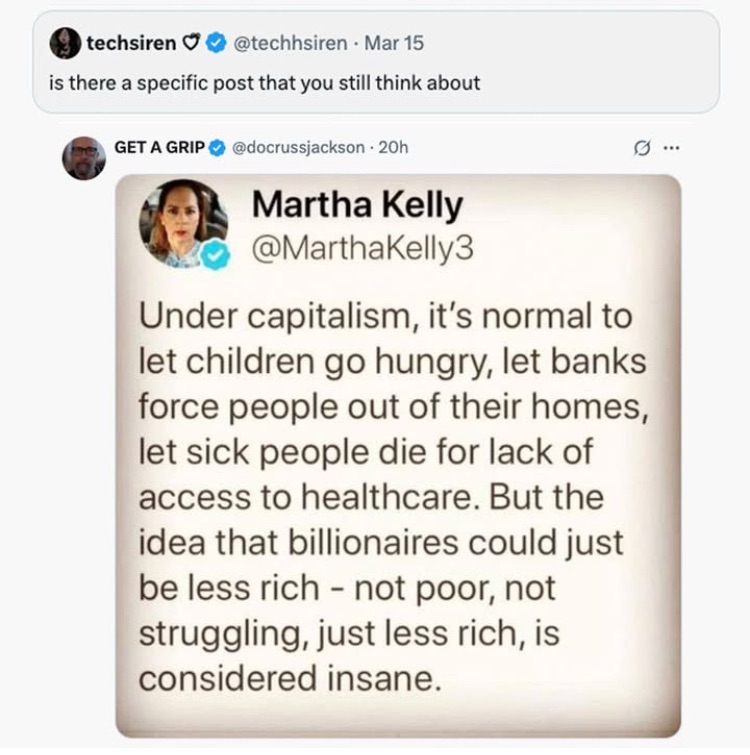
The result is a growing mistrust in the media, as people begin to see through the façade of authority that many news outlets still cling to.
Most pertinently, when media outlets and communications channels are owned by the billionaire class, they’re hardly going to report on stories that challenge their right to hoard wealth by advocating for the people and against the interests of big business.
In a world where the richest individuals control much of what we read, hear, and see, it’s naïve to believe the news is free from bias or agendas.
Instead, the narrative is carefully shaped to maintain the status quo, manufacturing consent for the hoarding of wealth by the few at the expense of the many.
And look, we all like money So we all seem to like it this way.
Money and the Media
In both the UK and the US, the ownership of major news organisations is concentrated in the hands of a few billionaire elites.
People like Rupert Murdoch, Jeff Bezos, and Michael Bloomberg have vast influence over what is reported and, more crucially, what is not reported.
- Rupert Murdoch – News Corp (The Times, The Sun, Fox News)
- Jeff Bezos – The Washington Post
- Michael Bloomberg – Bloomberg LP
- John Malone – Liberty Media (CNN)
- Elon Musk – X (formerly Twitter), where information and narratives are shaped through control of social media.
Media moguls rarely direct their newsrooms with explicit instructions, but the editorial line is shaped by subtle, pervasive pressure to protect the interests of the owners and advertisers.
When billionaires control the press, stories about wealth inequality, corporate greed, or political corruption are likely to be underplayed or spun in a way that minimises damage to their financial interests.
Take Rupert Murdoch, for example, who owns News Corp, which controls outlets like The Sun and The Times in the UK, and Fox News in the US, among a whole bunch of other stuff.
These outlets frequently shape narratives that serve conservative and pro-business interests, reinforcing policies that benefit the wealthy.
Similarly, Jeff Bezos, the Amazon guy who owns The Washington Post, is unlikely to push narratives that significantly challenge the tech industry or billionaire tax avoidance.
Amazon’s public image (!) is one of innovation and efficiency. In reality, its corporate model prioritises profit over people. Amazon workers are often subjected to harsh and unfair working conditions, including gruelling hours, high-pressure productivity targets, and inadequate breaks.
Reports of surveillance, limited job security, and insufficient pay relative to the company’s immense profits highlight the deep exploitation many employees face, particularly in warehouses where physical and mental strain is common.
The Damage Done by the Donald
Donald Trump popularised the term “fake news” to discredit any media coverage that portrayed him unfavourably, using it as a tool to dismiss legitimate criticism and investigative reporting.
While this tactic was primarily self-serving, there is an uncomfortable truth buried in it – much of the media landscape is indeed manipulated by corporate interests, sensationalism, and political spin, making it difficult for the public to discern the full truth.
By constantly invoking “fake news,” Trump not only undermined trust in the press but also sowed division, getting people to argue endlessly about misinformation and disinformation.
This strategy is a classic fascist technique – by eroding trust in independent institutions and creating confusion about what is real, it becomes easier for authoritarian figures to consolidate power, keeping people distracted while real issues go unaddressed.
And you’ve seen Succession, right?
While Succession appears to be a biting critique of the billionaire media-owning class, it could also be interpreted as subtly manufacturing consent for that same money-driven media machine. I mean, where’s the outrage?
The show portrays the Roy family, who control a global media empire, in a deeply unflattering light—exposing their moral corruption, greed, and ruthless ambition. On the surface, it seems like a scathing indictment of how billionaires manipulate media to preserve their power.
By turning this critique into entertainment, Succession may paradoxically reinforce the very system it critiques.
The key lies in how the show offers viewers a voyeuristic thrill. It humanises the Roys, making their personal dramas and conflicts as compelling as they are grotesque.
This focus on their dysfunction and internal power struggles turns them into tragic Shakespearean figures, encouraging viewers to identify with their humanity despite their monstrous behaviour.
By framing their world as one of complex family dynamics rather than a systemic critique of concentrated wealth and media power, Succession subtly shifts the narrative from the dangers of billionaires controlling public information to a more palatable, personal story about flawed individuals.
Awww bless!
Headline: News is Big Business.
Globally, the industry is worth an estimated $150 billion+.
The market is dominated by a few conglomerates, such as News Corp, Comcast (which owns NBC and Sky News), and Disney (which owns ABC and a stake in Vice).
The rise of tech giants like Google and Meta has also disrupted the news landscape, with their algorithms playing a significant role in determining what news gets seen and shared.
Despite this enormous value, the economic model of journalism is precarious.
Local news has been decimated, with thousands of newspapers shutting down over the past few decades. This leaves much of the power in the hands of those few global media brands, many of which are controlled by those billionaires.
Jobs for the Journos
The news industry is also at the mercy of a stark power imbalance.
While media executives and owners at the top amass significant wealth, most journalists earn relatively modest wages, creating a precarious dynamic, where journalists—often underpaid and overworked—are at the mercy of the corporate entities that control their pay checks.
You’d think somebody would put that right, no?
The result is a subtle but damaging form of control, where reporters may feel pressured to toe the company line or avoid stories that could upset powerful advertisers or the publication’s owners.
The fear of losing their jobs or career prospects can lead to self-censorship, diluting the integrity of journalism and allowing profit-driven motives to override the essential role of holding power to account.
This structure undermines journalistic independence, leaving the media less equipped to serve the public interest.
The Advertising Model and Soft Censorship
Even if billionaire ownership were not an issue, the advertising model that most media outlets rely on subtly but significantly restricts what can be reported and how.
Newspapers and online media depend on advertising revenue to survive, and advertisers don’t want to be associated with “bad news.”
Stories that might unsettle consumers—such as climate disasters, corruption scandals or labour exploitation—are often diluted to make them more palatable.
The phrase “if it bleeds, it leads” still holds true, but only if it doesn’t affect advertisers’ bottom lines.
For instance, in covering the climate crisis, some media outlets downplay the culpability of the fossil fuel industry because major oil companies are significant advertisers.
Similarly, coverage of consumer issues may be softened to avoid offending corporate sponsors.
The result is a media landscape where certain subjects are taboo, and the reporting that does make it through is often framed to minimise conflict with corporate interests.
The Press & Politics
The political class is adept at manipulating the press, spinning stories to suit their agenda.
Politicians hire media strategists, public relations experts and spin doctors to craft messages that avoid hard scrutiny.
Journalists, who are often overworked, underpaid, or dependent on access to politicians for their stories, can’t always ask the tough questions.
As a result, political coverage tends to be watered down, focusing more on soundbites and personalities than on holding power accountable.
Word Up
The language used in reporting also plays a significant role in shaping public opinion.
Take, for instance, the way conflicts are covered by major outlets like the BBC and The New York Times.
When reporting on Israel/Palestine, these outlets frequently soften or obscure the actions of the Israeli government while emphasising Palestinian resistance as “violence” or “terrorism.”
Words like “clash” or “conflict” are used to create a sense of false parity, as though there is an equal balance of power between the occupying force and the occupied people.
In contrast, Israeli military actions are often described with neutral terms like “retaliation” or “response,” subtly framing the state’s violence as justified or defensive.
This kind of language manipulation isn’t unique to the Israel/Palestine conflict.
Across the board, powerful institutions use their influence to control the narrative. The result is a public that is often misinformed or only partially informed about key issues, allowing those in power to maintain their control with little challenge.
Remember: This is Not North Korea
State-run media outlets like the BBC in the UK present a different but equally problematic news model.
While the BBC is not owned by private money or beholden to advertisers, it faces pressures of a different kind—namely, political influence from the state.
Funded by the public through a license fee and accountable to the UK government, the BBC operates under the guise of neutrality, but it is not immune to manipulation.
The BBC has been criticised for its reluctance to challenge government policies, often toeing the line when it comes to issues of national interest. The network’s attempts to remain impartial have sometimes led to a skewing of narratives in favour of those in power, creating a subtler but equally impactful form of bias.
One striking example is the BBC’s coverage of the ongoing conflict in Gaza.
Its reporting has been accused of downplaying the scale of Palestinian suffering and portraying the conflict as an equal clash between two sides, rather than as an occupation where one side holds vastly disproportionate power.
The BBC often uses language that softens the actions of the Israeli government, employing terms like “airstrikes” or “retaliation” without mentioning the context of occupation or systemic violence faced by Palestinians.
In contrast, Palestinian resistance is frequently framed as “terrorism” or “extremism,” subtly skewing public perception in favour of the Israeli state. This kind of language control not only shifts the narrative but also shields the UK government from criticism, given its longstanding support for Israel.
While not privately owned, the BBC’s reporting often mirrors the interests of the state, blurring the lines between independent journalism and state propaganda.
This political co-option of state media shows that even outlets not directly tied to private wealth can still fail to serve the public interest.
Whether through soft political pressure or adherence to state policy, the BBC exemplifies how public trust in journalism can erode when the interests of the powerful are allowed to dictate what the public sees and hears.
Driven to Distraction by the Daily Mail
Celebrity news is one of the tools used to fill the gaps left by the lack of real reporting, diverting attention from crucial societal and political issues.
The Daily Mail’s infamous “sidebar of shame” is a prime example of this phenomenon.
Laden with stories about the outfits of celebrities, their relationship dramas, and irrelevant gossip, it draws readers into a vortex of superficiality.
By focusing on the lives of the rich and famous, it shifts the narrative away from stories that truly matter, such as economic inequality, climate change, or corruption.
This constant stream of celebrity-focused content not only distracts from real news but also reinforces a culture where fame is equated with importance, leaving you even less informed about the world around you – not to mention a few brain cells down.
The Cost of a Corrupted Press
The media landscape today is shaped by powerful financial and political interests that hinder its ability to truly serve the public.
As long as billionaire owners, advertisers, and politicians hold the reins, the press will struggle to report freely and independently.
This isn’t just bad news for journalism—it’s bad news for democracy.
For the public to be truly informed and empowered, the media must regain its integrity and independence, breaking free from the constraints of big money and manipulation.
This is not news.
 Domesticky
Leave a comment