
The Price of Beauty and the Weight of History
The pursuit of thinness continues to be contemporary holy grail. A beauty standard that many aspire to achieve at any cost.
I know otherwise super sensible people for whom the scales weigh heavy, casting a calorific-laden cloud over their otherwise accomplished, capable and confident lives.
And this obsession with being slim is not a recent phenomenon.
It’s deep historical roots have been shaped by both hardship and control.
And nowhere is this contradiction more poignantly illustrated than in Ireland, where the shadow of famine lingers in the collective memory, and where the pursuit of thinness, once a symbol of suffering, has been repackaged as aspiration.

A Historical Hunger
For centuries, Ireland has been a land of both abundance and deprivation, its history marked by feast and famine.
An Gorta Mór of the 1840s is one of Ireland’s darkest chapters, leaving indelible scars on the Irish psyche.
It’s safe to say that, in those desperate years, thinness was not a goal. It was a consequence of devastation, a visible marker of suffering and loss.
A body stripped of nourishment was not a symbol of beauty but of tragedy.
Yet, as time passed and food security improved, the Western world began to rewrite the meaning of scarcity.
The fear of famine faded from view, replaced by a new narrative: in an age of abundance, thinness became a sign of control, discipline, and desirability. A ghostly irony emerged – what was once a sign of hardship was now framed as a privilege.
The cultural memory of starvation twisted itself into an aesthetic ideal, one that demanded women remain small, restrained, and hungry. Not just for food but for approval.

The Allure of the Thin Ideal
Thinness is relentlessly marketed by media, fashion, and celebrity culture. From magazine covers to Instagram influencers, the glorification of lean bodies presents an impossible standard: to be beautiful, you must be small; to be worthy, you must disappear.
Thinness is equated with self-discipline, attractiveness, and even moral superiority.
But beneath this glossy façade lies a cruel paradox. The pursuit of an increasingly skeletal aesthetic often comes at the expense of physical and emotional well-being.
Women are conditioned to believe that shrinking themselves is an act of success, yet the goalposts are always shifting. Even those who achieve the coveted figure are met not with satisfaction, but with an ever-present fear of losing it. The chase never ends.
This ideal is not about health. It is about control.

Patriarchy and the Politics of Size
It’s no coincidence that as women gained more rights, their ideal body size shrank.
When confined to the home, women’s curves were celebrated—fullness was linked to fertility and prosperity. A soft body was desirable when a woman’s primary role was motherhood, her value measured in her ability to bear and nurture children.
But as women stepped into public life, demanding votes, careers, and autonomy, the ideal body became smaller, tighter, more controlled.
Thinness became a tool of restriction, a way to ensure that women took up less space- not just physically, but politically and socially.
Add to all this that a woman consumed by the effort to shrink herself has little energy left to disrupt the status quo.
Quite literally, the less of her there is, the less of a threat she poses.
The patriarchy, of course, thrives on this contradiction. Women are bombarded with images that promote thinness while living in a food environment designed to sabotage them.
It’s not a conspiracy. Nobody is orchestrating this. It’s something that permeates a culture and we all buy into it enough to perpetrate it.
The Food Chain Trap
The struggle for thinness is further complicated by the reality of modern food culture.
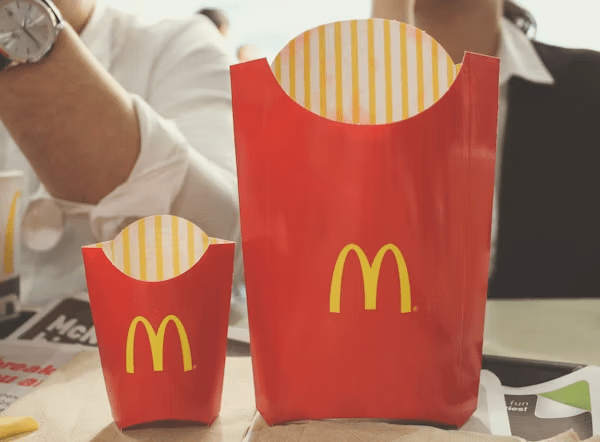
In Western societies, the cheapest and most accessible foods are ultra-processed, packed with sugar and cheap carbohydrates.
These products – engineered for addiction – are pushed by largely unregulated food companies whose primary concern is profit, not public health.
For those with wealth, the ability to eat “clean” and maintain a slim figure is an achievable privilege, with premium organic foods and personal trainers forming a protective barrier against weight gain.
Meanwhile, for those living pay check to pay check, fast food and budget-friendly processed meals are often the only option.
The irony is stark: the very system that pushes women to be thin simultaneously makes it difficult to achieve health on a working-class budget.
The thin ideal, then, is not just oppressive. It’s deeply exclusionary.

The Irish Paradox
In Ireland, the relationship with food is particularly complex.
Traditional Irish cuisine is hearty and filling, designed to sustain people through hard labour and harsh winters. Food, in Irish culture, is about survival, community, and care.
Yet, even here, the pressure to conform to global beauty standards is intense.
Young Irish women are inundated with the same unrealistic body ideals as their counterparts elsewhere, trapped between their heritage – a culture that celebrates abundance – and a modern world that glorifies deprivation.
The result? A generation caught between the comfort of tradition and the impossible demands of thinness.
The Price We Pay
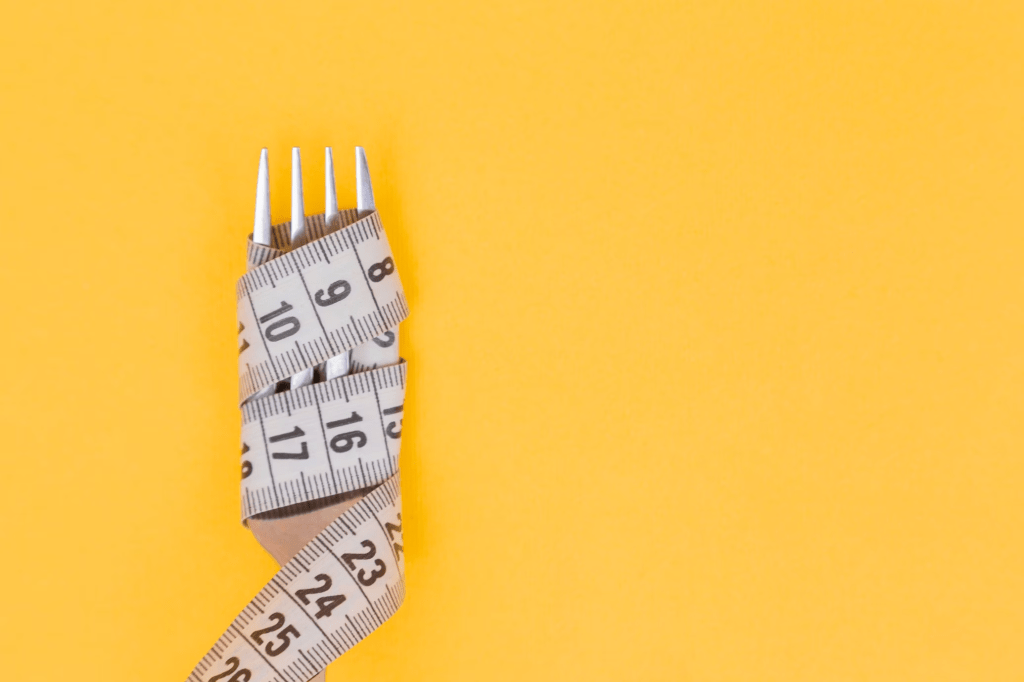
For many, the pursuit of thinness leads to an endless cycle of dieting, weight loss, and regain, often accompanied by self-loathing. The dieting industry profits handsomely from this cycle, offering quick fixes and empty promises that keep women engaged in a lifelong battle against their own bodies. Meanwhile, the deeper costs—mental health struggles, disordered eating, and a disconnection from the joy of food—continue to rise.
The true tragedy of this obsession is that it offers no real satisfaction. There is no finish line, no moment of arrival. It is a thin gruel—a pursuit that leaves women hungry, physically and emotionally, for something that will never truly nourish them.
A Call to Rebalance
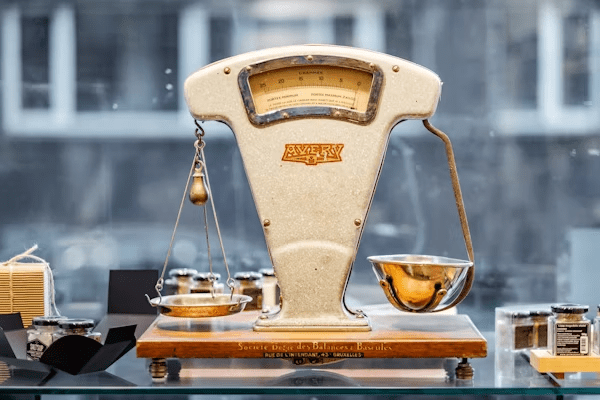
It is time to question what we have been sold. To challenge the idea that thinness is the ultimate marker of beauty, health, or worth. Our ancestors knew better. They valued food as a source of strength, community, and survival. They understood that nourishment is about more than calories—it is about culture, connection, and care.
Thin gruel does not satisfy. Starving oneself—whether through restrictive diets or societal expectations—leaves us weak, not just in body, but in spirit. Instead of celebrating deprivation, we should reclaim a standard of health and beauty that centers on vitality, strength, and the ability to take up space unapologetically.
After all, our bodies are not just canvases for aesthetic approval. They are the vessels of our history, our struggles, and our resilience.
And real beauty is not in scarcity—it is in sustenance.
Let us choose food, not as a means to an end, but as a life-giving, communal joy. A legacy that honours both our past and our future.
 Domesticky
Leave a comment