BELFAST, IRL — March 22, 2025
A queen met a coloniser this week.
One was elected by the people. The other was born into a role passed down like antique silver – an empire stitched together from other people’s land, labour, and language.
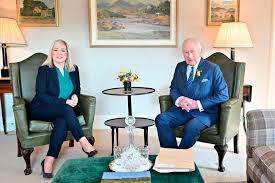
Michelle O’Neill, First Minister of Northern Ireland, republican leader and – if we were anyway royalty inclined – de facto Queen of Ulster, stood with King Charles III, the unelected mascot of a monarchy that once ruled a lot of the globe with brutality and impunity.
She was born of ballots. He was born of bloodlines.
The press called it historic. Many called it absurd. But for anyone who believes in democracy, equality and human dignity, this moment was something far more uncomfortable: a woman raised in the rubble of occupation forced to engage, yet again, with the figurehead of the very regime that helped create it.
Born to Rule vs. Elected to Lead
King Charles represents a system that believes some people are born better than others.
A monarchy that thrives on class, conquest and colonial nostalgia.
It’s a system anathema to republicans, socialists, democrats – anyone who believes the accident of birth shouldn’t determine your value or your voice.
Michelle O’Neill represents the opposite.
If Ireland had kept crowns, she’d wear one. But we threw that system in the sea centuries ago.
She’s no one’s princess. She’s a daughter of Tyrone, raised through conflict, chosen by the people and guided by a vision of justice that doesn’t require ermine robes or inherited palaces.
The Monarchy’s Colonial Crimes: The Greatest Hits of Horror
The British monarchy isn’t some harmless anachronism. It is the living legacy of an empire built on plunder and violence. Its crimes are not ancient history.
They’re recent, raw, and ongoing:
- Ireland: The Great Hunger, Bloody Sunday, and a century of occupation.
- India: 35 million dead in famine. Brutal suppression of independence.
- Kenya: Torture camps during the Mau Mau rebellion.
- South Africa: The world’s first modern concentration camps.
- Palestine: Partition, militarisation, and ongoing instability.
“The British Empire didn’t collapse. It metastasised.”
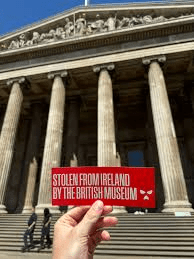
And yet, the crown remains above scrutiny. Its jewels torn from the lands it helped devastate, its power untouched by democratic oversight.
The Monarchy’s Record in the North of Ireland
If King Charles represents anything, it is the continuity of a regime that brutalised people in the North as standard operating procedure.
These were not isolated incidents. They were part of a colonial strategy of control, intimidation, and impunity:
- Bloody Sunday (1972): British soldiers shot 26 unarmed civil rights marchers in Derry, killing 14. No one has ever been prosecuted.
- Internment Without Trial: From 1971, hundreds of mostly Catholic nationalists were arrested and imprisoned without charge, often tortured during interrogation.
- Collusion with Loyalist Death Squads: British intelligence services supplied weapons, intelligence, and cover for loyalist paramilitaries who murdered civilians—including the Miami Showband massacre, Pat Finucane’s assassination, and countless random sectarian killings.
- Shoot-to-Kill Policy: British security forces were authorised to shoot suspects on sight—no warning, no due process. Teenagers were among the dead.
- Plastic Bullets: Used routinely on civilian crowds. 17 people killed by them -mostly children.
- State Surveillance and Infiltration: Communities were blanketed with informers and agents provocateurs. Families torn apart. Trust weaponised.
- Criminalisation of Political Prisoners: The H-Block hunger strikes weren’t just about status – they were about the right to exist as political beings. Ten men died demanding that right.
- Censorship and Propaganda: Sinn Féin representatives were banned from speaking on British TV or radio until the 1990s. Their words were dubbed by actors – a surreal silencing of elected voices.
The British state didn’t just police the North. It occupied it.
This is the legacy King Charles inherits. Not just as a man, but as a symbol of a system that never asked permission, never showed remorse and still enjoys global immunity.
What Sinn Féin Actually Stands For
While critics scramble to paint O’Neill’s royal engagements as capitulation, they miss the point entirely. Her vision is still rooted in the goals of the movement she serves.
The 2013 Sinn Féin Constitution and Rules spell it out plainly:
“The objectives of Sinn Féin are to end British rule in Ireland… establish a Democratic Socialist Republic… and achieve a just distribution and effective control of the nation’s wealth and resources.”
Michelle O’Neill has not abandoned those principles. She is working within the system to build toward them. Her political career is a daily act of resistance and negotiation – fighting to transform an unjust system from within, while never pretending it’s just.
What the Photo Doesn’t Show
The handshake was brief. The headlines were clean. But the moment contained a century of grief, strategy, and endurance.
It was the meeting of a woman who has attended the funerals of those murdered by crown forces, and a man whose medals gleam with colonial pride.
One shook hands for peace. The other for preservation.
Michelle O’Neill did not look cowed. She looked composed. Because this wasn’t a moment of acceptance. It was one of accountability.
Who Really Rules?
Final Image: Who Really Rules?
The Queen of Ulster met the King of Empire. One earned her seat through the will of the people. The other inherited his in a system that still masquerades as a democracy – where power is passed down, not voted in, and history is curated for export.
Britain speaks often of freedom. It casts itself as the world’s moral compass — quick to judge others for censorship, corruption, or tyranny – while preserving a monarchy built on inequality, entitlement, and empire.
It calls that tradition. It calls that civilisation.
And still, she had the bravery to meet him. A tyrant by birthright, cloaked in medals he didn’t earn, representing a system that once tried to silence hers.
Not for ceremony. Not for peace. But because sometimes, real power walks into the room anyway—and smiles.
“We buried our monarchs. They kept theirs in a palace—and call it progress.”
The monarchy needs her legitimacy
more than she needs their approval.
 Domesticky
Leave a comment