
How Colonialism Peeled the World for Profit
Have you ever been having a wee moment with a wee banana in your wee back kitchen and given a second thought to how that wee yellow fruit made it from a wee faraway plantation into your wee hand?
That humble banana has a backstory. A colonial one. One that shaped the world we live in.
Bananas, like sugar, tea and cotton, are endemic in our Irish lives even though they’re not from around here.
And they’re more than just goods and foods.
They’re relics of a system designed to extract resources from one place to enrich another.
The whole set-up was never about sharing the world’s bounty; it was about setting up supply chains that funnelled wealth from the colonised to the coloniser.
The Colonial Blueprint: Plantations and Profits
When European empires spread across the globe, they didn’t just plant flags. They planted entire economies. They set up companies like the British East India Company and the United Fruit Company. And they weren’t just in the business of moving goods.
They were in the business of dominating lives, reshaping local economies, and consolidating power.
Take your wee banana for one.
It’s a wee tropical guy. But through colonial networks, it’s become a staple in temperate climates.
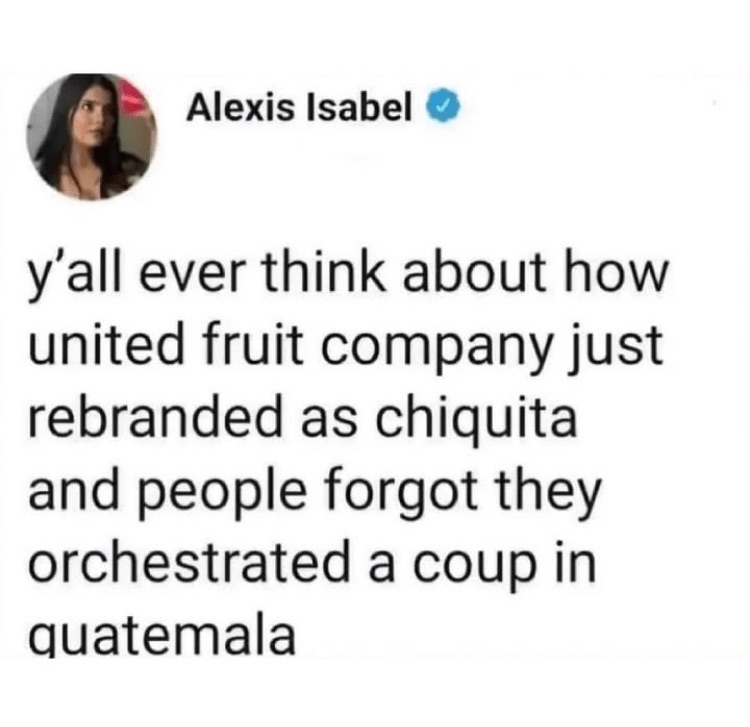
Companies like United Fruit didn’t just harvest bananas; they controlled the land, dictated local policies, and effectively ran countries like Guatemala.
The term “banana republic” didn’t come from a place of whimsy—it was a stark reality where foreign corporations controlled everything from production to politics.

Commodities and Control
Colonial powers needed raw materials – sugar from the Caribbean, tea from India, rubber from Africa – and they needed them cheap.
So they didn’t just trade. They built infrastructure that made colonies economically dependent. Railways, ports, and processing plants weren’t constructed for the local benefit but to ship goods back “home” efficiently.
When Ireland was under British rule, we saw this model first hand. Our food was exported while we starved.
The Great Famine wasn’t just about a blight. It was about an economic system that prioritised British tables over Irish lives.
This is how colonialism works: It sets up systems that look like trade but function as extraction.

The Long Hangover
Today, the economic powerhouses that were born from these colonial networks still dominate. You buy a banana from a supermarket chain that, at some point, got its start through a web of exploitation.
The shape of the global economy – who works, who profits, and who decides – is rooted in this colonial history.
And we’re not just talking history lessons here. Modern trade agreements often mirror colonial patterns. Wealthy nations dictate terms, control the narrative, and maintain the economic imbalance.
Our everyday shopping choices are still shaped by these old power dynamics.

Colonialism Rebranded: Neo-colonialism in Modern Supply Chains
The empire’s flags may have been lowered, but the mechanisms of control have merely donned new disguises. Neo-colonialism—the 21st-century sequel to the colonial saga—operates through economic dominance rather than direct political rule.
It’s the art of pulling strings from afar, ensuring that former colonies remain tethered to the interests of their erstwhile masters.
Take, for example, the global supply chains that snake their way from the Global South to the aisles of our local supermarkets. The exploitation embedded in these networks is a testament to colonialism’s enduring legacy.
In West Papua, Indigenous communities are witnessing their ancestral rainforests being razed for palm oil plantations.
The fruits of this destruction end up in products like KitKats and Oreos, linking our snack choices to the displacement and suffering of these communities.
Activists have called for boycotts, highlighting the direct line from colonial resource extraction to today’s corporate greed.

Similarly, the Democratic Republic of Congo has taken legal action against tech giant Apple, alleging the use of conflict minerals sourced from war-torn regions.
These minerals, essential for our smartphones and gadgets, are often extracted under conditions that violate human rights, perpetuating a cycle of violence and exploitation reminiscent of colonial plunder.
Even initiatives that appear benevolent on the surface can mask neo-colonial intentions. China’s Belt and Road Initiative, for instance, has been criticised for saddling developing nations with debt, leading to accusations of “debt-trap diplomacy.”
This strategy mirrors colonial tactics of economic subjugation, where infrastructural investments serve more to entangle than to empower.

A Slice of Resistance
So what’s the answer? Awareness.
Understanding that the logistics of our daily lives – food on the table, clothes on our backs – are the flesh on the bones of colonial enterprises.
Buying local, choosing fair trade and supporting companies that prioritise ethical sourcing aren’t just consumer choices. They’re small acts of resistance against a global system designed to profit from inequality.
Knowledge is power, and if we’re savvy enough, we can use that awareness to make better choices – and slowly unravel the legacy of exploitation.

 Domesticky
Leave a comment