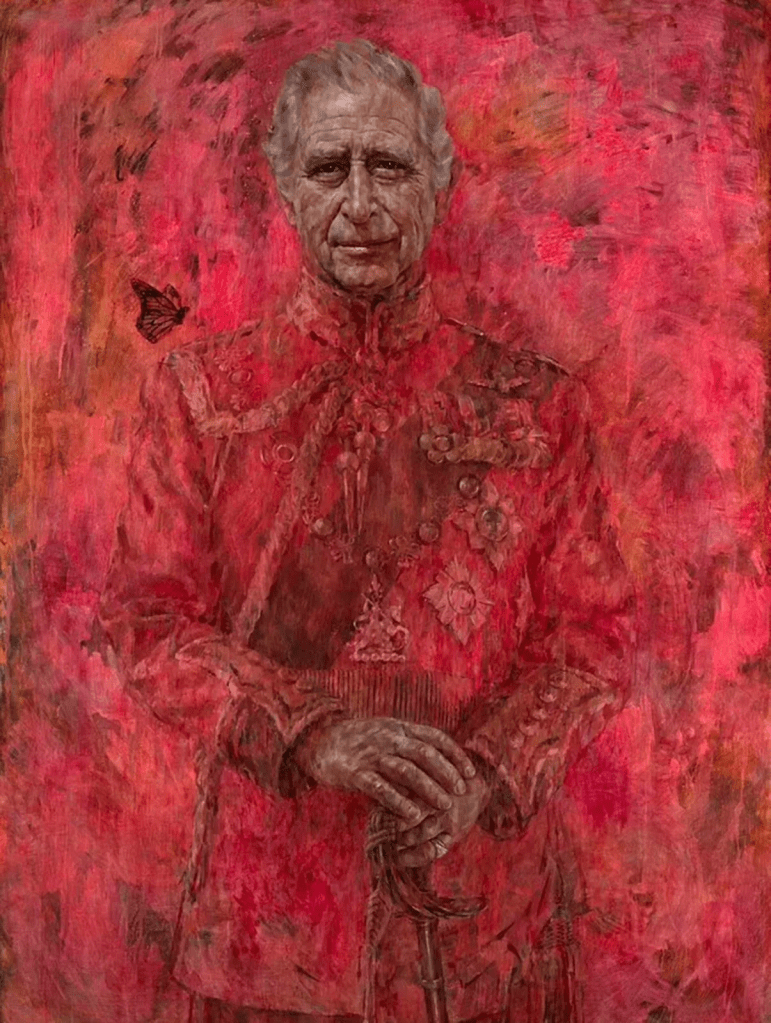
A Royal Portrait or an Imperial Post-Mortem? The Last Vestige of Colonial Hubris.
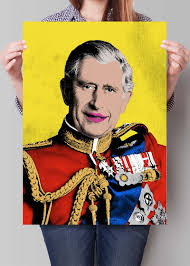
Ah, but what a masterpiece! What a stroke of unintentional genius! This portrait is not merely a painting. It is the final, triumphant artifact of empire: the last, bloated jewel in the crown before it topples under its own unbearable weight.
This is colonialism’s Guernica, an accidental masterpiece of decay and indulgence.
The artist, whether through divine inspiration or subconscious rebellion, has captured something far greater than a mere king.
This is the empire itself: gasping, swollen, clinging to its last breath, wrapped in the bloodied tapestries of its own making.
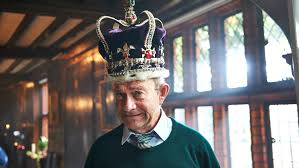
Look at the textures! The fevered layers of red upon red: the congealed, arterial hues. All the very lifeblood of a monarchy built on conquest, now thick and choking, dragging the subject down into the depths of history’s reckoning.
And those fingers! Oh, those proud, stuffed sausage relics of a plundering past!
If hands tell the story of a life, these are not merely royal appendages. They are an entire epoch of imperial indulgence made flesh. Each swollen digit a vault stuffed with untold riches, each knuckle an unpaid debt, each bloated fingertip a lingering echo of taxes wrung from starving colonies.
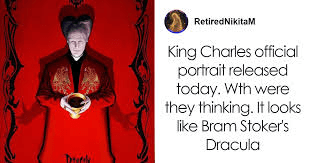
These fingers have clutched the spoils of empire, stuffed themselves on public wealth, gorged on the labour of others. And now? They can barely hold themselves upright. They bulge and buckle, grotesque and unignorable – the perfect, unknowing symbol of empire at its end stage. Desperately holding on.
The face—how it fades! The red overtakes him, consuming his form, as though history itself is absorbing him back into the abyss.
There is no vitality here, no grandeur. Only the vacant stare of a man perched atop a crumbling monolith. The empire has been swallowed by its own excess, and this portrait immortalises its final moment of pomp before the inevitable plunge.
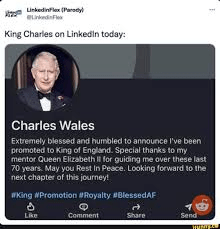
And let us not overlook the most delicate yet damning detail: the butterfly, a spectral whisper amid the carnage, a fragile icon fluttering against the suffocating weight of history.
In the language of classical painting, the butterfly is often a memento mori, a symbol of transformation, fleeting beauty and the soul’s ephemeral passage.
Here, however, it is neither triumphant nor liberated – it is trapped, drowning in the arterial tide, its wings struggling against the thick, coagulated layers of empire’s wreckage.

Is this a nod to the fragile hope of renewal? A spectral symbol of nature’s resilience? Or merely an accident of composition, a painterly afterthought lost in the fevered delirium of the work?
Lol no! In truth, the butterfly – like so many of us – just got caught up in the dense layers of blood and guts, swallowed whole by the visual carnage. A fly in the ointment. A pictorial casualty, it becomes another silent witness to the butchery of colonialism, pinned beneath the weight of history’s unrelenting brushstrokes.
This – más é toil Dé é, agus mura bhfuil, beidh orainn brath ar ár gcuid cleasa féin!* – is colonialism’s last great portrait. The pinnacle of its visual language. A painting so rich in imperial legacy that it bleeds.
It is not a portrait of a man. It is a requiem for an empire, a final, magnificent gasp of grandeur before the whole thing collapses into the dust. As all empires are fated to do.
What a masterpiece. What an accidentally perfect farewell to the age of kings.
*If it’s God’s will, and if not, we’ll have to rely on our own tricks!


Leave a Reply