It wasn’t the British government, the unionists or the hand-wringing diplomats who brought the peace process to life.
It was Irish republicans who forced it into being. They recognised that endless war was a trap and that real power lay in strategy and negotiation.
By choosing the path of diplomacy, they compelled the world to acknowledge the legitimacy of the Irish cause and the centuries of injustice endured.
They didn’t lay down arms out of defeat but because they had gained something more powerful. Leverage.
And now? Now we look around at the world, and it’s as if we fought our way out of the frying pan only to find the whole kitchen on fire.
Bombs in Belfast – Better for the Bottom Line
After everything we went through in Ireland – after all the death, the trauma, the decades of bombs tearing through cities – Belfast continues to be in the bomb-making business – and is back in the headlines for it in what the British government is framing as an economic boon.
This week, the UK announced a £1.6 billion deal that will allow Ukraine to buy over 5,000 air defence missiles, manufactured in Belfast.
The deal, hailed by Prime Minister Keir Starmer as “vital for protecting critical infrastructure now” and “strengthening Ukraine in securing the peace,” will triple production at the Thales weapons factory in Belfast.
Let that sink in.
Belfast – a city that has spent the last 25 years rebuilding from the wreckage of a war that saw bombs rip through its streets – is now being repurposed as a hub for weapons manufacturing. The same city that once mourned its dead from car bombs and pipe bombs is now a supplier of 5,000 air-to-ground missiles. That we know of.
And what’s the justification? Well, according to the UK government, the deal will:
- Create 200 jobs in Northern Ireland.
- Support 700 more jobs across the UK.
- Help Ukraine “negotiate peace from a position of strength.”
Peace through strength. Haven’t we heard that before? How many times has that lie been sold to the world?
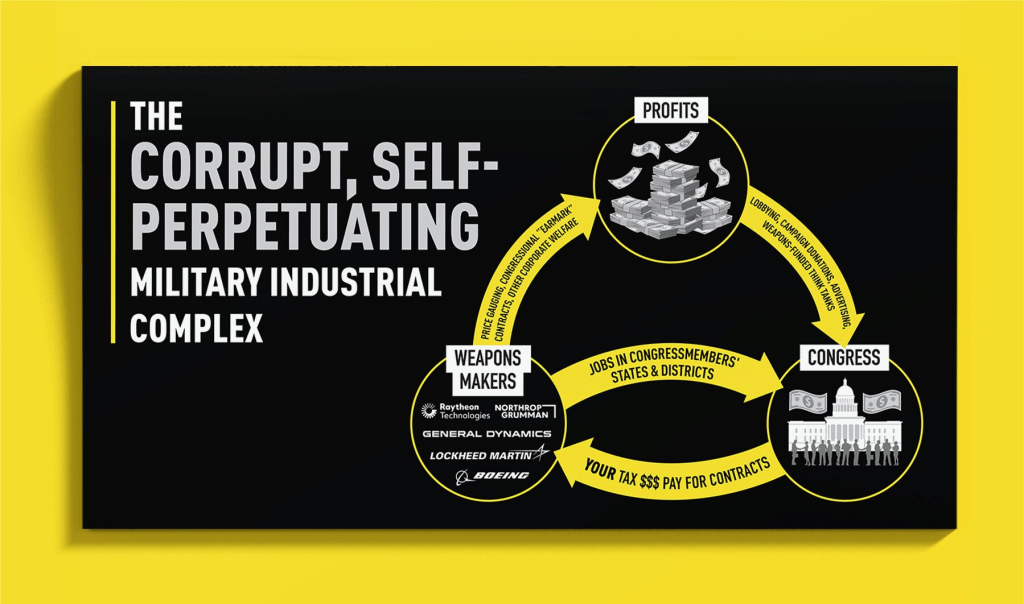
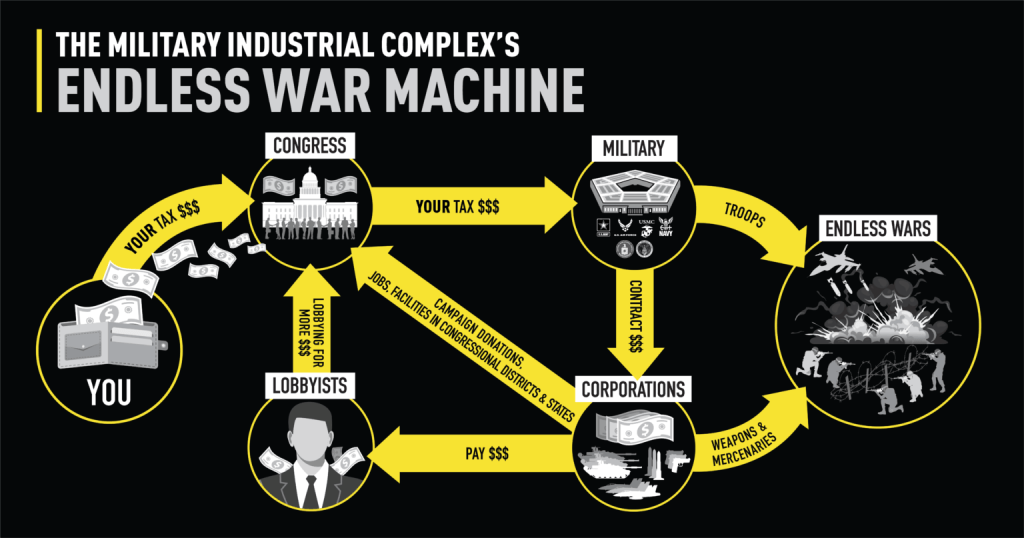
What is the Military-Industrial Complex?
It’s profitable.
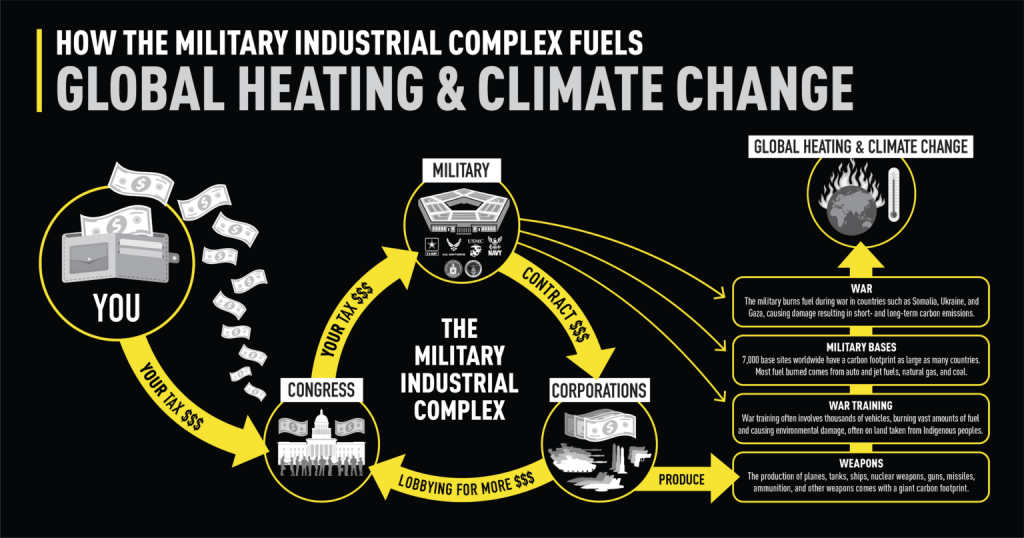
The more conflicts there are, the more weapons are needed. The more fear there is, the bigger the defence budgets. And the more governments pour money into weapons, the more power these companies gain.
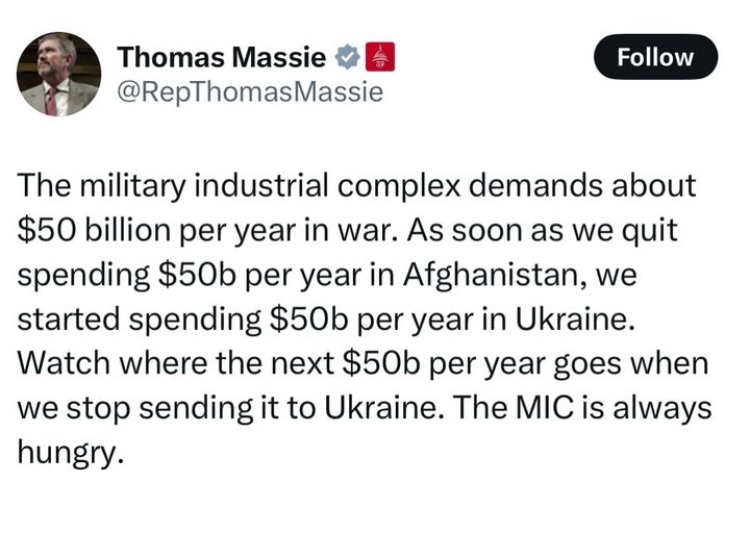
If that sounds like a conspiracy theory, it’s not. The term itself was first warned about by U.S. President Dwight Eisenhower back in 1961. He knew what was coming. What he didn’t know was how much worse it would get.
Nowhere is this more glaring than in Palestine, where the horror unfolding daily is not just a tragedy—it’s a business model.
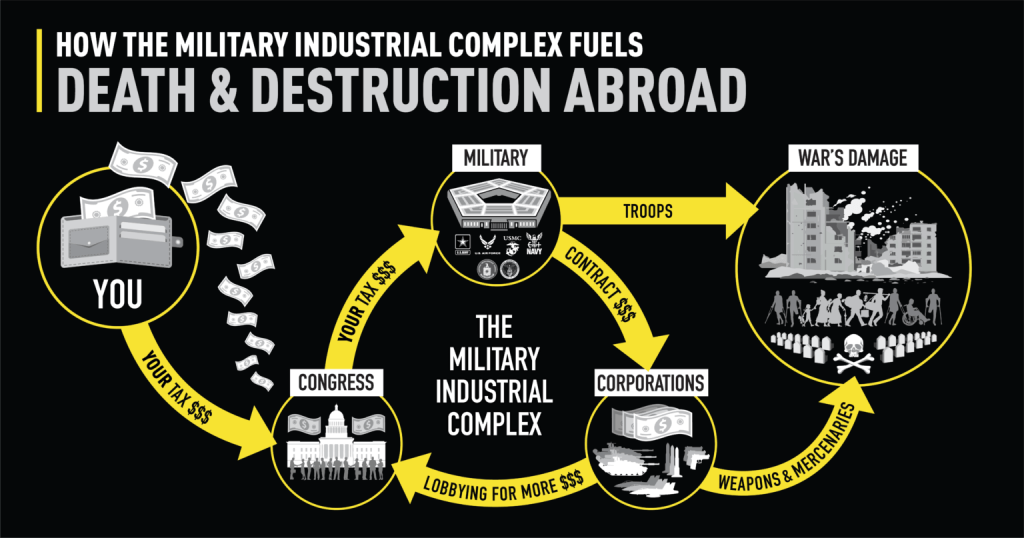
Every bomb dropped on Gaza, every missile fired, every new piece of military technology tested on a captive civilian population is part of the MIC’s theatre.
Israel, backed by the largest arms industries in the world, has turned its decades-long occupation into a live demonstration of modern warfare. The latest weapons are showcased in real-time, tested on real people, before being sold to governments worldwide under the promise that they’ve been “proven” in combat.
The siege of Gaza is not just genocide. It’s a marketing campaign for the MIC.
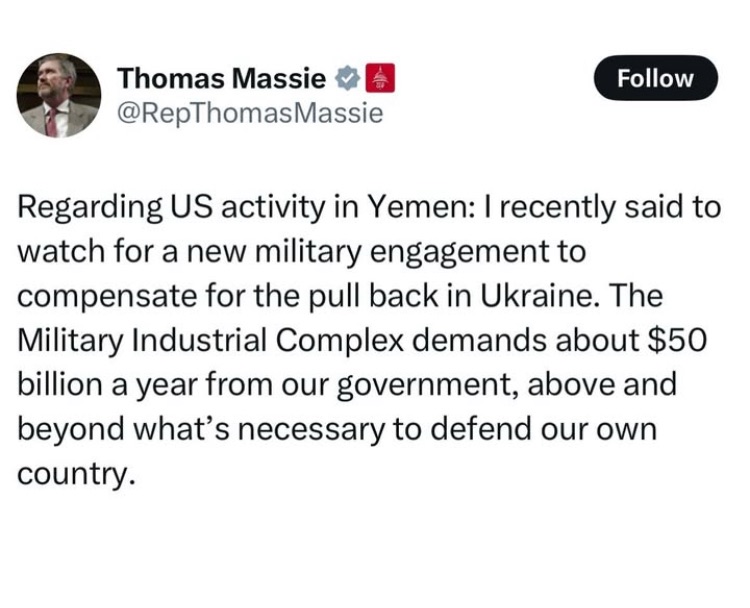
Countries with militarised borders, authoritarian regimes, and expansionist ambitions are watching, taking notes, and placing orders. And who profits? The same corporations that manufacture the missiles in Belfast, the drones that bomb Yemen, the fighter jets that level apartment blocks in Ukraine and Syria.
The MIC doesn’t pick sides. It just picks profits.
Who’s Running the Show?
It’s not shadowy figures in basements—it’s billion-dollar corporations in boardrooms.
Here’s a quick roll call of the worst offenders:
- Lockheed Martin – The biggest weapons manufacturer in the world. They make everything from fighter jets to missiles, and they have their hands in nearly every war you can name.
- Raytheon Technologies – Specialises in missiles, drones, and surveillance technology. If there’s a bombing campaign happening, odds are their products are involved.
- Boeing Defence – Best known for making commercial airplanes, but also a giant in military aircraft, space weaponry, and surveillance systems.
- Northrop Grumman & General Dynamics – Players in cyber warfare, missile defence, and the lucrative game of “modernising” military forces worldwide.
And who funds them? Governments, including the U.S., the UK, the EU—and yes, Ireland too, as we increasingly entangle ourselves in European defence pacts.
How Did We Get Here?
We got here because war became a business, and like all businesses, it needs constant demand. No war? No profit. So, conflicts are encouraged, prolonged, and manufactured when necessary.
- The U.S. spends $886 billion a year on its military – more than the next ten countries combined.
- Countries like Ireland, which once prided itself on neutrality, are being nudged (or shoved) into military alliances under the guise of “security cooperation.”
- Arms companies actively lobby governments to keep military budgets high. In the U.S., for example, weapons manufacturers spent over $100 million on lobbying in a single year.
And here’s the kicker: while these companies rake in trillions, the very countries that fund them are struggling to house their own citizens, keep hospitals running, and provide a basic standard of living.
Where Does Ireland Stand?
Neutrality, once a point of pride, is being eroded by stealth. And for what? For a seat at a table that serves only the warmongers?
What Now?
We fought so hard for peace here. We know what it takes. We know what’s lost when war takes hold. And yet, we’re watching as the world descends into perpetual war mode, with no exit strategy because war itself is the point.
But here’s the thing—we’re not powerless.
- We can demand a return to real neutrality—not just as a historical badge of honour, but as a strategic choice.
- We can reject the idea that war is inevitable. It isn’t. The same way people in Ireland sat at negotiating tables instead of blowing each other to pieces, peace is a political choice.
- We can hold our leaders accountable when they start playing footsie with the arms industry.
Because if there’s one thing Ireland knows, it’s that war is never just about the soldiers. It’s about the mothers, the children, the homes destroyed, the futures stolen. And we should never, ever be part of the machine that fuels that.
Can we drop the MIC ALREADY?



Leave a Reply