
Ah, Britain. The empire on which the sun never set. Their compass worked just fine for navigation. It was just their moral compass that was functioning questionably.
But what if, instead of being obsessed with greatness, Britain had just been… good?
You know. Fair. Kind. Ethical. More concerned with justice than jingoism?
What would the world look like if Britain led with decency instead of domination?
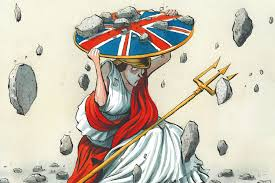
1. The Empire of Mutual Respect (Instead of Pillaging and Plundering)
Imagine if Britain had shown up to other people’s countries and said, “Hey, nice civilisation! Mind if we trade and learn from each other?” instead of “This is ours now, give us your spices.”
A world without colonised wealth being siphoned into London would have meant India, Africa, and the Caribbean would have industrialised alongside Europe, rather than being economically kneecapped for centuries.
No artificial borders carved up by men who had never been to the lands they were divvying up.
No “partition” disasters that led to generational trauma.
No stolen artifacts sitting in the British Museum like some kind of kleptomaniac’s trophy case.

2. Slavery? A Hard Pass, Thanks
Instead of running the transatlantic slave trade, what if Britain had said, “Actually, we’re not going to make a single penny off human suffering?”
If Britain had taken a moral stand early on – say, in the 1600s instead of waiting until 1833 – the global racial hierarchy built around exploitation might not have taken root.
Imagine a world where entire economies weren’t built on stolen labour.
Better yet, imagine how different race relations would be today if one of history’s biggest colonial powers had refused to be complicit in slavery and instead championed human rights from the start.
3. Wars? Let’s Just Not
Britain had a real knack for poking its nose into conflicts, often just to keep its own interests safe. And more latterly just to make a few quid.
What if, instead, it had led global peacekeeping efforts rather than playing imperial chess? No appeasing Hitler in the 1930s, no carving up the Middle East post-WWI with a map and a total lack of foresight.
Maybe even – brace yourself – early support for independence movements instead of violently suppressing them.
What if, instead of clinging to empire, Britain had helped former colonies transition into strong, independent nations, treating them as equals instead of upstart rebels? The 20th century could have been defined by cooperation rather than conflict.

4. An Economy That Works for Everyone
Rather than hoarding wealth extracted from colonies and funnelling it into the pockets of a few aristocrats, imagine a Britain that built up fair economies.
Investing in local industries rather than draining them.
Encouraging fair trade rather than economic dependency.
Supporting education and infrastructure in colonies – not just enough to keep things running, but enough to foster real, lasting prosperity.
We might have had a world where global wealth wasn’t so grotesquely lopsided, where the Global South wasn’t still trying to recover from being used as an economic buffet for European elites.
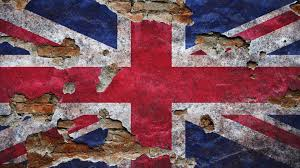
5. Cultural Exchange, Not Cultural Erasure
Instead of forcing English language, laws, and customs onto every land it touched, what if Britain had embraced the cultures it encountered? What if indigenous traditions, languages, and governance structures had been preserved and respected, rather than erased or shoved into a museum exhibit?
A world where being ‘civilised’ wasn’t measured by how British you could become. A world where multiculturalism wasn’t a postcolonial afterthought, but the founding principle of international relations.

The Verdict: A Britain That Didn’t Burn Bridges (or Whole Countries)
If Britain had prioritised justice over conquest, it would still have been influential—just for the right reasons. It could have led by example, proving that power and ethics aren’t mutually exclusive. The result? A world with fewer wars, fairer economies, stronger democracies, and far less generational trauma.
But hey, hindsight is 20/20. Britain could have been the world’s most beloved mentor instead of its most persistent meddler. Instead, it spent centuries chasing greatness and left a mess for the rest of us to clean up.
That’s not great, is it?

 Domesticky
Leave a reply to Good Britain. An Alternate Timeline. – Domesticky Cancel reply